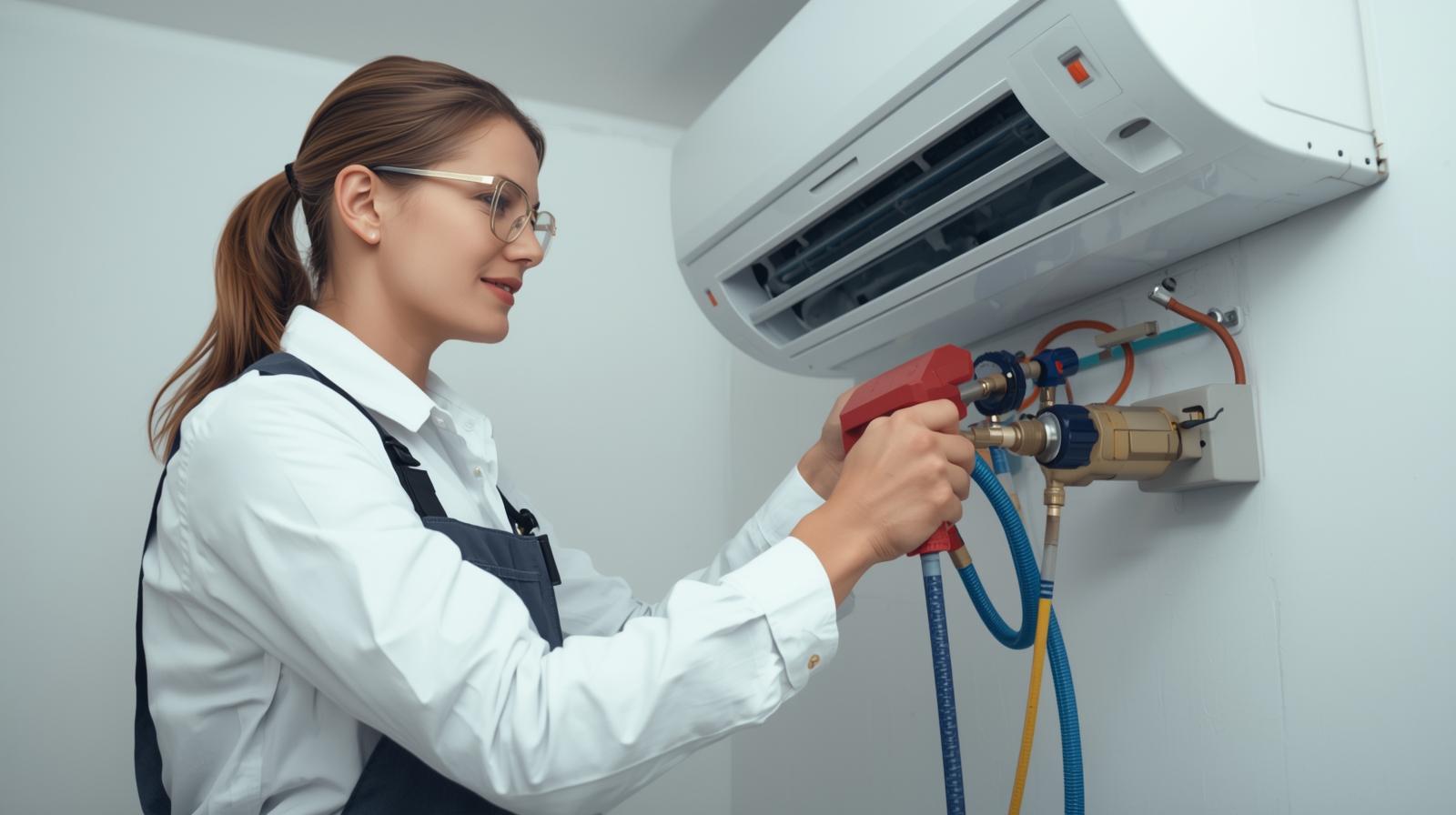
Air conditioning systems are essential for maintaining indoor comfort, especially in regions that experience high temperatures. To ensure your AC operates efficiently and reliably, it requires periodic maintenance, accurate gas refilling, and complete cooling inspections. These services are crucial for improving system efficiency, preventing unexpected failures, and extending the overall lifespan of the unit.
This article provides a refined and original overview of the importance of gas refilling, explains the step-by-step process, and highlights why professional technicians should handle these services.
Every AC system depends on refrigerant gas to absorb heat inside your home and release it outdoors. When gas levels drop, the cooling performance decreases significantly. This reduction often occurs due to leaks, prolonged use, or irregular maintenance.
Weak cooling performance – The AC struggles to cool the room or takes longer than usual.
Higher electricity bills – The unit consumes more energy when refrigerant levels are low.
Ice buildup on the coils – Insufficient gas disrupts proper airflow, causing ice formation.
Unusual hissing sounds – These noises often indicate a leak in the refrigerant lines.
Warm air from the vents – Even in cooling mode, the AC may blow warm air due to low gas levels.
Proper gas refilling restores cooling efficiency, reduces energy usage, and ensures stable AC performance.
A cooling inspection is a detailed evaluation that helps determine the overall health of your AC system. Trained professionals examine each component to ensure the unit functions safely and efficiently.
Technicians measure the temperature difference between the air going into the system and the air coming out. If the temperature reading is below the recommended level, it indicates a potential issue.
Special gauges are used to measure refrigerant pressure. These readings are compared with standard manufacturer values to determine whether gas refilling is required.
Evaporator and condenser coils must be clean for proper heat exchange. The technician inspects these coils for dirt buildup, corrosion, or airflow restrictions and cleans them if necessary.
The compressor’s performance is evaluated along with the fan motors. Any abnormal sounds, overheating, or vibration is carefully inspected.
Leak testing is mandatory before adding new gas. Technicians use advanced tools—such as nitrogen tests, electronic leak detectors, or UV dye—to locate and repair leaks.
The thermostat is checked for accuracy, and electrical elements such as wiring, capacitors, and relays are examined to ensure safe operation.
An accurate gas refilling service involves a series of technical steps to maintain system safety and performance.
The technician identifies the root cause of the cooling issue and confirms that low refrigerant levels are responsible.
All leaks must be repaired before refilling the gas to avoid future refrigerant loss.
A vacuum pump is used to remove moisture, dust, and air from the system. This step is essential to protect the compressor and improve cooling efficiency.
Using digital tools and pressure gauges, the technician fills the refrigerant to the exact level recommended by the manufacturer. Accuracy is important because even small variations can affect performance.
The AC is switched on and tested to ensure proper cooling, stable airflow, accurate thermostat response, and balanced gas pressure.
Different AC models require specific refrigerants:
R22 – Common in older air conditioners.
R410A – An energy-efficient refrigerant used in many modern systems.
R32 – A high-performance, environmentally friendly option used in the latest AC models.
Technicians always select the correct refrigerant based on your AC specifications.
Maintaining proper gas levels ensures faster and more consistent cooling.
A well-maintained air conditioner uses less electricity, helping reduce monthly bills.
Routine inspections protect the compressor and internal components, extending the life of the AC.
Early detection of leaks and damaged parts prevents expensive future breakdowns.
Balanced airflow and stable temperature create a comfortable indoor environment year-round.
Gas refilling and cooling inspections must be performed by qualified technicians because they require technical expertise and advanced tools. Professional service ensures:
Accurate and reliable diagnosis
Safe refrigerant handling
Proper leak detection
Correct refrigerant charging
Efficient and dependable service
Choosing trained experts helps maintain optimal performance and prevents unnecessary damage to your AC system.
Regular gas refilling and complete cooling inspections are essential for maintaining your AC’s performance, efficiency, and reliability. These services ensure improved cooling, reduced energy usage, and long-term system protection. By relying on experienced professionals and following a proper maintenance schedule, you can enjoy consistent comfort and long-lasting cooling efficiency.

 English
 العربيّة